Free shipping on orders over $75 | First Order? Save 20%.
(888) 510-7196

Nature’s Sunshine Lymphatic Drainage Drops | Guide

Explore Nature's Sunshine Lymphatic Drainage drops with Cleavers, Red clover, Stillingia root & Prickly ash bark. Learn how these herbs traditionally support lymph flow.

Overview

What Are Nature's Sunshine Lymphatic Drainage Drops?

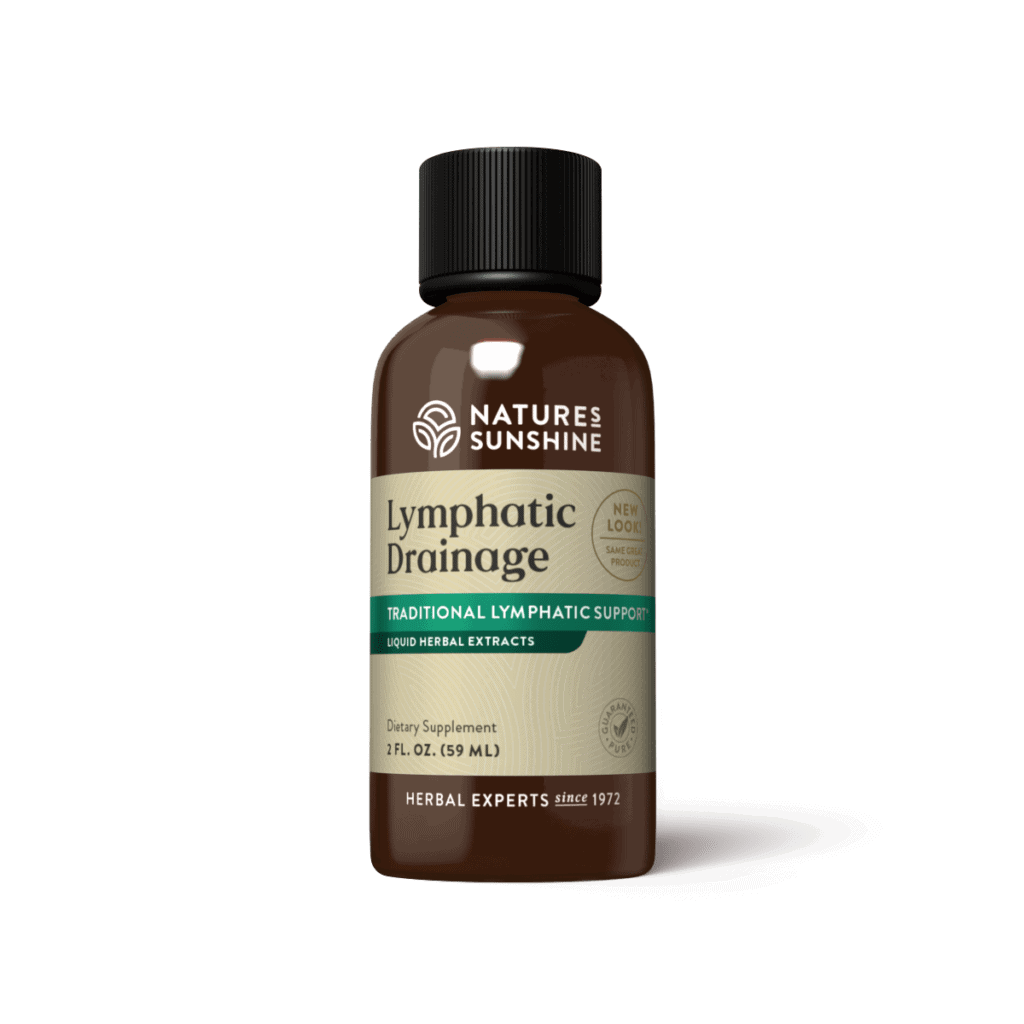
Nature's Sunshine Lymphatic Drainage is a liquid herbal formula designed to aid the proper dispersion of lymphatic fluid. The lymphatic system plays a quiet but essential role in overall health β€” it helps remove waste from cellular metabolism, supports fluid balance throughout the body, and contributes to immune function.

When lymphatic flow becomes sluggish, the body may struggle to clear metabolic waste efficiently. Nature's Sunshine Lymphatic Drainage drops bring together four botanicals with deep roots in Western herbal tradition β€” Cleavers, Red clover, Stillingia root, and Prickly ash bark β€” each historically valued for its role in supporting lymphatic movement, fluid balance, and overall well-being.

This 2 fl oz liquid extract is taken as drops in water, making it easy to incorporate into a daily routine. If you have questions about whether lymphatic support is right for your wellness goals, our naturopath is available for a free consultation.

Traditional Foundation

How These Herbs Have Been Used to Support Lymphatic Health

The four herbs in Nature's Sunshine Lymphatic Drainage drops share a common thread: each has been used for centuries across multiple herbal traditions to encourage the body's natural eliminative and circulatory processes. Together, they represent a carefully chosen blend that targets Lymphatic Drainage, lymphatic health, and water retention and fluid balance.

Cleavers (Galium aparine) is widely regarded as the primary lymphatic tonic in Western herbal medicine, with a history spanning European, Native American, and Traditional Chinese traditions. Red clover (Trifolium pratense) has been recommended by herbalists as a blood purifier and alterative β€” a class of herbs traditionally believed to support detoxification through the liver and lymphatic systems. Stillingia root was extensively used by 19th-century Eclectic physicians specifically for lymphatic stagnation and swollen glands. Prickly ash bark rounds out the formula as a traditional lymphatic stimulant known for its role in supporting circulation and mucous membrane health.

While modern clinical trials specifically evaluating lymphatic outcomes for these herbs remain limited, their longstanding cross-cultural use provides a rich historical foundation. Preclinical laboratory studies have begun to explore the mechanisms behind their traditional reputations, including immunomodulatory, anti-inflammatory, and diuretic activities.

What's inside

Key ingredients

Cleavers aerial parts β€” 300 mg
Cleavers (Galium aparine) is a sprawling annual plant of the Rubiaceae family, historically known as clivers, catchweed, goosegrass, and sticky willy. It is the cornerstone lymphatic herb in this formula and one of the most consistently documented lymphatic tonics in Western herbalism, with thousands of years of use across European, Native American, and Traditional Chinese traditions to encourage lymph fluid movement, drain congested lymph nodes, and support detoxification. Herbalists have traditionally recommended Cleavers β€” especially as a fresh spring tincture β€” for swollen lymph nodes, lymphedema, and lymphatic congestion. The aerial parts contain a complex phytochemistry including iridoid glycosides (such as asperuloside), flavonoids (quercetin, rutin, kaempferol, luteolin, apigenin), coumarins, tannins, phenolic acids (chlorogenic, caffeic, ferulic), polysaccharides, and silica. Coumarins present in Galium species are a class of benzopyrones that traditionally promote Lymphatic Drainage. Cleavers has also been historically valued for its gentle diuretic action β€” one of its best-attested traditional uses β€” employed for edema, dropsical swellings, and water weight. Preclinical animal studies have confirmed increased urinary volume with extracts, though human trials are lacking. Laboratory studies have demonstrated immunomodulatory activity: bioactive fractions including polysaccharide, pectin, and polyphenolic complexes have been shown to stimulate the activity of immunocompetent blood cells and increase lymphocyte proliferation in vitro. Antioxidant activity has been confirmed by DPPH radical scavenging assays, and in vitro wound-healing, antimicrobial, and antiproliferative activities have been documented, though all of this evidence remains preclinical. Cleavers is generally regarded as safe when used at recommended doses.
Red clover blossom extract β€” 300 mg
Red clover (Trifolium pratense) is a perennial legume with a long history in Western herbalism as a blood purifier and alterative β€” a class of herbs traditionally believed to support detoxification through the liver and lymphatic systems. Known also as cow clover, purple clover, and beebread, Red clover has been recommended by herbalists for centuries for swollen glands, chronic lymphatic congestion, and skin eruptions thought to arise from lymphatic stagnation. Its isoflavones and naturally occurring coumarins β€” a class of benzopyrones that have been studied in clinical trials for lymphedema β€” are believed to support fluid movement through lymphatic tissues. Red clover's key bioactive compounds include the isoflavones biochanin A, formononetin, genistein, and daidzein. Biochanin A modulates NF-ΞΊB and MAPK signaling pathways relevant to vascular and lymphatic function. While modern research on Red clover has focused primarily on its isoflavones for menopausal symptoms and cardiovascular support β€” a meta-analysis of 8 RCTs confirmed isoflavone activity for menopausal vasomotor symptoms β€” its traditional lymphatic-vessel and blood-cleansing claims remain empirical. The herb has a long cross-cultural record: European herbalists documented its use for respiratory conditions and women's health as early as the 14th century, Native American healers used it as a spring tonic, and it appears in Traditional Chinese Medicine as well. Red clover is generally considered safe when used appropriately, though individuals on anticoagulant therapy, those with hormone-sensitive conditions, and pregnant or nursing women should consult a healthcare provider before use.
Stillingia root β€” 300 mg
Stillingia (Stillingia sylvatica), also known as Queen's Delight and Yaw Root, is a perennial plant of the Euphorbiaceae family native to the sandy pine barrens and coastal regions of the southeastern United States. It is one of the most consistently cited traditional lymphatic herbs in North American folk and Eclectic medicine, used historically to stimulate lymphatic flow and address lymphatic stagnation. King's American Dispensatory described its action on the lymphatic system as unsurpassed, and Eclectic physicians used Stillingia extensively for swollen glands, scrofula (lymphatic tuberculosis), chronic skin eruptions, and conditions attributed to poor lymphatic function. It was classified as an "alterative" β€” an herb believed to support the body's eliminative channels, particularly the lymphatic system and skin. Eclectic texts reported that Stillingia increased the action of the skin and the secretions of the kidneys and bowels. Native American tribes also valued the root, and Creek Indian women reportedly consumed the boiled, mashed roots after giving birth. The root contains tannins, volatile oil, fixed oil, acid resin, and diterpene esters. Preliminary laboratory studies have investigated anti-inflammatory and immunomodulatory properties of constituents isolated from Stillingia species, though no clinical trials have demonstrated health benefits for the whole herb in humans. All evidence for Stillingia's lymphatic effects rests on its deep traditional use.
Prickly ash bark β€” 300 mg
Prickly ash (Zanthoxylum spp.) is a spiny shrub or tree of the Rutaceae (citrus) family, known across multiple herbal traditions for its stimulating properties. In professional herbal materia medica sources, Prickly ash is classified as a "lymphatic stimulant," and naturopathic herbal texts note that due to its stimulating effect upon the lymphatic system, circulation, and mucous membranes, it will have a role in the holistic treatment of many conditions. This is a traditional herbal classification without supporting human clinical evidence. Historically, Native American tribes and 19th-century Eclectic physicians used Prickly ash bark for peripheral circulation, rheumatic conditions, digestive sluggishness, and oral pain β€” earning it the common name "toothache tree" for the numbing, tingling sensation produced when the bark is chewed. King's American Dispensatory described Prickly ash as acting upon the secretions, the nervous and circulatory systems. The bark contains alkaloids (including chelerythrine and berberine), alkylamides (sanshools), coumarins, lignans, volatile oils, and flavonoids. Preclinical studies have explored anti-inflammatory, antimicrobial, and analgesic properties of isolated Zanthoxylum compounds, though clinical trials for Prickly ash preparations are absent. In this formula, Prickly ash bark complements the other three herbs by traditionally encouraging circulation and lymphatic movement.
Lymphatic Drainage
Lymphatic Drainage
β˜…β˜…β˜…β˜…β˜… 4.6 (35 reviews)
  • βœ“ Free shipping over $75
  • βœ“ 90-day easy returns
  • βœ“ Ships within hours
Lymphatic Drainage
Lymphatic Drainage
$37.95
Who Benefits

Who May Benefit from Lymphatic Drainage Support

Nature's Sunshine Lymphatic Drainage drops may be a good fit for adults looking to support their body's natural lymphatic function and fluid balance. The lymphatic system helps keep the body healthy by removing waste from cellular metabolism, and this formula aids that process for better overall well-being.

People who are interested in traditional herbal approaches to lymphatic health β€” including those who feel sluggish, experience occasional water retention, or simply want to support their body's circulatory and eliminative systems β€” may find this formula worth exploring.

Because the herbs in this formula have specific safety considerations β€” including potential interactions with anticoagulant medications and contraindications during pregnancy β€” we recommend speaking with a qualified healthcare provider before starting. Our naturopath offers free consultations and can help you determine whether this product aligns with your individual health needs.

Usage Guide

How to Take Lymphatic Drainage Drops

Take 1 ml (approximately 15–20 drops, 1/4 teaspoon) in water twice daily.

Each 2 fl oz bottle provides a convenient liquid format that's easy to measure and add to a glass of water. Some people prefer to take their drops at consistent times β€” such as morning and evening β€” to build a steady routine.

About the author

Written by Greg Howlett

GH

Greg Howlett

Founder

Greg has spent over a decade helping customers choose the right natural-health products. He personally vets every formula we carry and writes these guides to cut through the marketing noise with practical, experience-based advice.

FAQ

Frequently asked questions

What does the lymphatic system do, and why does it matter?

The lymphatic system helps keep the body healthy by removing waste from cellular metabolism. It plays a key role in fluid balance, immune function, and overall well-being. Nature's Sunshine Lymphatic Drainage contains nutrients to aid the proper dispersion of lymphatic fluid, supporting this important system.

What herbs are in Nature's Sunshine Lymphatic Drainage drops?

The formula contains four traditional herbs: Cleavers aerial parts (300 mg), Red clover blossom extract (300 mg), Stillingia root (300 mg), and Prickly ash bark (300 mg). Each herb has a long history of use in Western herbalism for supporting lymphatic function, fluid balance, and circulatory health.

Is there clinical research supporting these herbs for Lymphatic Drainage?

The herbs in this formula are supported by longstanding traditional use across European, Native American, and Eclectic medical traditions. Preclinical laboratory studies have explored immunomodulatory, antioxidant, and diuretic properties of some of these botanicals. However, clinical trials specifically evaluating lymphatic outcomes in humans have not been published for these herbs. Their inclusion in this formula is based on their deep traditional foundation.

How should I take Nature's Sunshine Lymphatic Drainage drops?

Take 1 ml (approximately 15–20 drops, 1/4 teaspoon) in water twice daily. The liquid format makes it easy to measure and incorporate into your daily routine.

Are there any safety considerations I should know about?

While the herbs in this formula are generally considered safe when used as directed, there are specific considerations. Cleavers may interact with diuretic medications and is not recommended during pregnancy. Red clover may interact with anticoagulant drugs and is not recommended for pregnant or nursing women or those with hormone-sensitive conditions. Stillingia should be avoided during pregnancy and lactation. Prickly ash is contraindicated during pregnancy and for those on anticoagulant therapy. We recommend consulting a healthcare provider before use, and our naturopath is available for a free consultation.

What is the serving size and how long does a bottle last?

The serving size is 1 ml, taken twice daily. The bottle contains 2 fl oz of liquid extract. The number of servings per bottle will depend on precise measurement, but at the recommended usage of approximately 2 ml per day, the bottle is designed to last several weeks.

Talk to an expert

Talk to Dr. Shannyn Fowl

Not sure if this is right for you? Book a free, no-pressure consultation for personalized guidance on your health goals.

Book your free consult β†’
Who we are

About Caring Sunshine

A family-run reseller of premium supplements β€” free shipping, a 90-day guarantee, and real people who know the products.

Learn more about us β†’