Free shipping on orders over $75 | First Order? Save 20%.
(888) 510-7196

Nature’s Sunshine VS-C Capsules | TCM Immune Support

Explore Nature's Sunshine VS-C capsules — a concentrated TCM blend of 11 Chinese herbs that supports viral immune response, respiratory health, and the immune system.

Product Overview

What Are Nature's Sunshine VS-C Capsules?

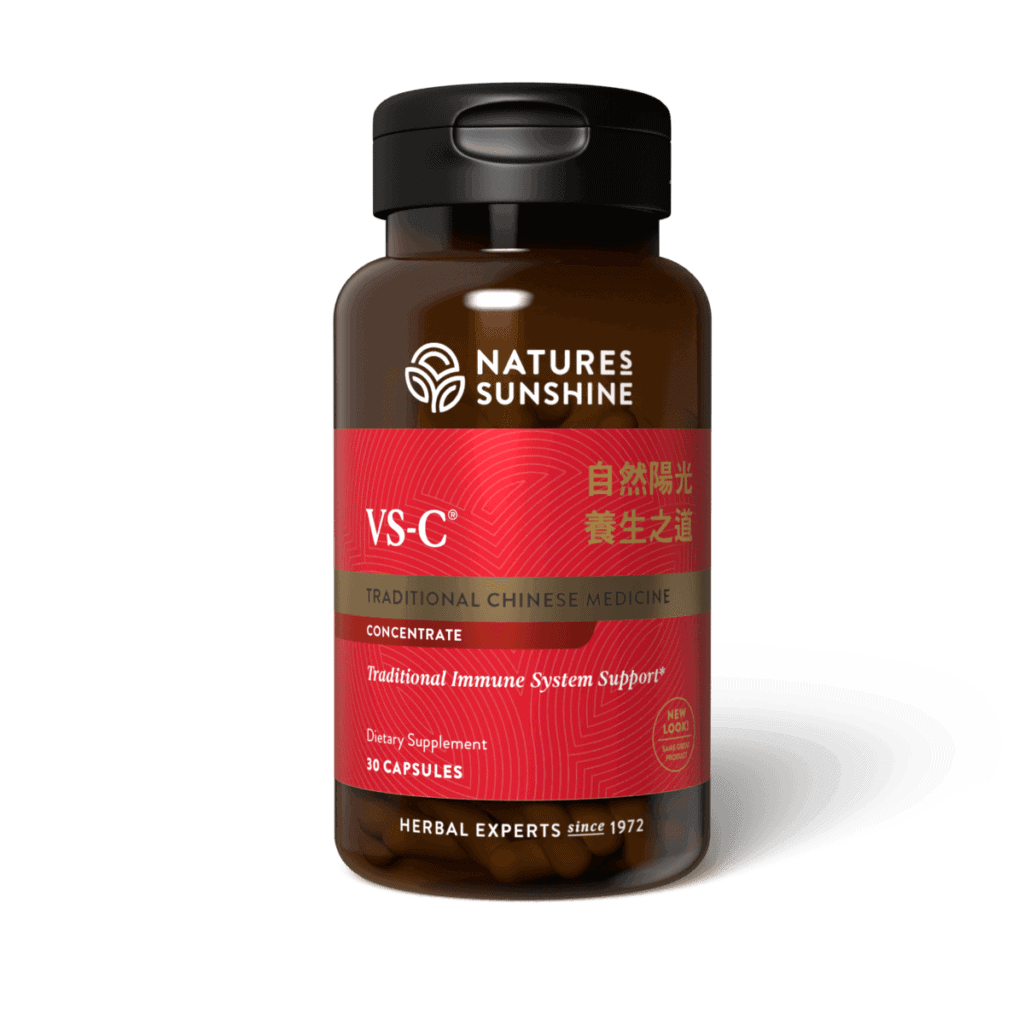
Nature's Sunshine VS-C® TCM Concentrate is a highly concentrated blend of traditional Chinese herbs designed to nourish the immune system, protect from biological stressors, and support the liver. Rooted in traditional Chinese medicine principles, this formula is classified as "metal-enhancing" — a TCM designation associated with lung and respiratory support.

Each capsule contains a concentrated extract of eleven herbs that work together to maintain an environment promoting healthy microbial balance, encourage natural detoxification processes, and support the respiratory tract. Whether you're looking for daily immune maintenance or extra support during challenging seasons, nature's sunshine vs-c capsules offer a time-tested herbal approach.

If you have questions about whether this formula is a good fit for your wellness goals, our naturopath is available for a free consultation — we're always happy to help you find the right match.

How It Works

A TCM Approach to Immune and Respiratory Support

The philosophy behind nature's sunshine vs-c capsules draws from centuries of traditional Chinese medicine. TCM views immune resilience as closely connected to the respiratory system and the body's ability to clear toxins — and this formula addresses both.

VS-C® TCM Concentrate maintains an environment that promotes healthy microbial balance and encourages natural detoxification processes. The blend supports the respiratory tract while nourishing the immune system and protecting from biological stressors. Each herb in the formula contributes its own traditional and research-backed properties, from immunomodulatory activity to respiratory support and liver protection.

The "metal-enhancing" classification in TCM specifically relates to strengthening the lung and large intestine organ systems — both considered essential to the body's defensive energy.

What's inside

Key Ingredients

Concentrated extract of Dandelion whole plant — 350 mg
Dandelion (Taraxacum officinale) has been used in Traditional Chinese Medicine for over a thousand years under the name Pu Gong Ying to purify the blood and support the immune system. Preclinical research suggests that Dandelion polysaccharides possess immunomodulatory activity, including activation of macrophages and modulation of cytokine production. Sesquiterpene lactones in the plant also exert immunomodulatory effects. The root is a rich source of prebiotic inulin, supporting beneficial gut bacteria. Traditionally, Dandelion has been used as a liver tonic, blood purifier, and lymphatic cleanser in Chinese, Arab, and European herbal medicine, and its diuretic action — confirmed in a small 2009 pilot study (Clare et al., n=17) showing approximately 30% increased urine output within 5 hours — supports fluid balance relevant to lymphatic function. Preclinical studies have also reported that Dandelion extracts may help protect against liver damage induced by toxic agents, with taraxasterol identified as a key bioactive compound modulating inflammatory and oxidative stress pathways.
Purslane top — 350 mg
Purslane (Portulaca oleracea) is a succulent plant traditionally called the "vegetable for long life" in TCM, where it has been used for thousands of years. Research demonstrates immunomodulatory effects through multiple mechanisms: clinical trials confirm reductions in C-reactive protein (CRP) and NF-κB, while in vitro studies show Purslane polysaccharides stimulate lymphocyte proliferation. A small clinical trial in 13 asthma patients found oral Purslane extract produced pulmonary function improvements comparable to theophylline, and reviews confirm bronchodilatory properties via beta-adrenoceptor stimulation and muscarinic receptor inhibition. The plant is one of the richest terrestrial sources of omega-3 fatty acids (alpha-linolenic acid), and contains high levels of vitamins C and E, flavonoids including quercetin, and minerals. Traditional use for respiratory conditions including cough, shortness of breath, and excess mucus is documented across multiple ethnobotanical traditions worldwide.
Indigo leaves — 350 mg
Indigo leaves from plants in the genus Indigofera have been used in traditional Chinese and Indian medicine for centuries for respiratory conditions, sore throat, and immune support. In TCM, the processed form (Qing Dai) has been used since at least the Tang Dynasty for its heat-clearing, detoxifying, and blood-cooling properties. Indigo naturalis exerts immunomodulatory effects documented in both clinical and preclinical studies, including regulation of Th1/Th17 immune responses, AhR-mediated IL-22 production, and suppression of autoimmune-relevant pathways. In Ayurvedic, Siddha, and TCM traditions, Indigo leaves are documented for respiratory conditions including bronchitis, asthma, and cough; the plant and its extracts are listed as expectorant and anti-inflammatory in traditional pharmacopoeias. Traditionally, indigo naturalis was blown as a powder into the throat in classical TCM practice for sore throat and oral inflammation.
Indigo root — 350 mg
Indigo root comes from the same genus (Indigofera) as Indigo leaves, with the root carrying its own distinct applications in traditional herbal medicine. In Ayurveda, indigo roots and leaves have been historically used via decoctions for asthma and respiratory complaints, with the anti-inflammatory properties of the plant's constituents considered mechanistically relevant. Indigo naturalis demonstrates immunomodulatory effects including regulation of immune cell responses in both clinical and preclinical studies. The plant is also listed in Ayurvedic materia medica for spleen disorders including splenomegaly, and in TCM traditions for respiratory conditions including bronchitis and cough. Research has confirmed that the key phytochemical constituents — including indirubin, tryptanthrin, and flavonoids — contribute to anti-inflammatory and immune-modulating activity.
Thlaspi whole plant — 350 mg
Thlaspi arvense (field Pennycress) is a member of the Brassicaceae (mustard) family that has been used in traditional herbal medicine across European, Tibetan, and Chinese systems. The plant is classified as an expectorant in multiple traditional medical systems, historically used for respiratory conditions including bronchial irritation, lung congestion, and conditions involving pus in the lungs. In Tibetan medicine, the seeds were specifically valued for pulmonary complaints and are described as anti-inflammatory and febrifuge. The plant contains glucosinolates — including sinigrin — which break down into biologically active isothiocyanates with documented antimicrobial properties. In Chinese traditional medicine, the entire plant is described as anti-inflammatory, expectorant, and hepatic, and has been used for conditions including carbuncles and appendicitis.
Bupleurum root — 350 mg
Bupleurum falcatum (Chai Hu) is one of the most revered herbs in Traditional Chinese Medicine, with over 2,000 years of documented use. It is a primary ingredient in the classical formula Xiao Chai Hu Tang (Minor Bupleurum Decoction), historically used for sub-acute infections, alternating chills and fevers, and liver stagnation. Its principal bioactive compounds — saikosaponins A, C, and D — demonstrate immunomodulatory effects including T-lymphocyte regulation, B-cell activation, and bidirectional immune modulation. Saikosaponin B2 has been shown in vitro to inhibit viral entry into human hepatocytes. Preclinical research suggests saikosaponin A significantly inhibited asthmatic bronchoconstriction in sensitized animal models. Bupleurum polysaccharides (bupleurans) stimulate spleen cell activity and lymphocyte proliferation. Traditionally, the herb is used for febrile respiratory illnesses including colds and flu, and for the TCM 'Shao Yang' pattern of alternating fever and chills.
Scute root — 350 mg
Scute root, also known as Baikal skullcap (Scutellaria baicalensis; Huang Qin), has been used in TCM for over 2,000 years as a heat-clearing and dampness-draining herb targeting the lung and stomach meridians. Its primary bioactive compounds — baicalin, baicalein, and wogonin — modulate both innate and adaptive immunity via toll-like receptor downregulation, NF-κB/MAPK pathway inhibition, macrophage polarization, and Nrf2 activation. Multiple in vitro studies confirm antiviral activity against influenza, SARS-CoV-2, HBV, HCV, and other viruses. The lungs are a primary organ target for this herb, supported by clinical use in China for viral pneumonia, bronchial conditions, and upper respiratory infections. In a multicenter analysis, S. baicalensis was compared with ribavirin for the treatment of hand, foot, and mouth disease with encephalitis in five Chinese hospitals. The herb is a key ingredient in Shuanghuanglian, used in Chinese hospitals for upper respiratory infections.
Typhonium rhizome — 350 mg
Typhonium (Typhonium flagelliforme and related species) is a traditional medicinal herb in the Araceae family with a long history of use across Southeast Asian and Chinese herbal medicine. In TCM, the closely related T. giganteum (Bai Fu Zi) is classified as a wind-phlegm dispersing herb used in formulas for respiratory diseases, excessive phlegm accumulation, and wind-cold-damp conditions. T. flagelliforme is traditionally used for coughs, pulmonary ailments, and swelling. Preclinical research has identified anti-inflammatory, anti-allergic, and immunomodulatory properties, including inhibition of mast cell degranulation and modulation of FcεRI signaling. The plant's phytochemical profile includes flavonoids, cerebrosides, and pheophorbides, with anti-inflammatory effects reported in both in vitro and animal studies.
Ginseng root — 350 mg
Ginseng (Panax Ginseng) has been used in Traditional Chinese Medicine for over 2,000 years as a life-preserving tonic and is considered one of the most important herbs for strengthening the body's defensive energy. Its primary bioactive compounds — ginsenosides — have well-documented immunomodulatory effects, modulating key immune cells including macrophages, NK cells, dendritic cells, T cells, and B cells. Multiple randomized controlled trials demonstrate reduced incidence and severity of respiratory infections and enhanced vaccine-induced antibody responses. A study of 227 people found that Panax Ginseng extract (100 mg daily) reduced cold and flu cases by approximately 65% compared to placebo when used alongside flu vaccination. A meta-analysis of 12 RCTs (1,298 patients) found Ginseng significantly reduced disease-related fatigue. In TCM, Ginseng enters the spleen, lung, and heart meridians and is used to fortify qi, produce bodily fluids, and increase resistance to stress.
Cassia twig — 350 mg
Cassia twig (gui zhi, from Cinnamomum cassia) is one of the fifty fundamental herbs in traditional Chinese medicine. In TCM, it is classified as a warming herb that tonifies yang, disperses cold, and promotes circulation — commonly used in formulas to address cold-type respiratory conditions and to warm the body's channels. Cassia bark is documented across TCM and Ayurvedic medicine as an expectorant, antitussive, and warming respiratory remedy used for coughs, bronchitis, and cold-type respiratory conditions. In vitro research has demonstrated antiviral activity of C. Cassia bark oil against influenza virus. The principal bioactive compound, cinnamaldehyde, demonstrates anti-inflammatory effects through inhibition of the NF-κB pathway and reducing pro-inflammatory mediators including interleukins and TNF-α, along with antimicrobial properties against multiple pathogen types.
Licorice root — 350 mg
Licorice root (Glycyrrhiza glabra) appears in approximately 60% of traditional Chinese medicine prescriptions and has been used for over 4,000 years across Assyrian, Egyptian, Greek, Chinese, and Indian cultures. Its primary active compound, glycyrrhizin, has documented antiviral activity against multiple viruses including SARS-CoV, influenza, and HSV. The German Commission E approves licorice for catarrhal conditions of the upper respiratory tract, and the EMA recommends it as an expectorant for cough associated with the common cold. Glycyrrhizin exerts anti-inflammatory effects and provides demulcent and expectorant properties supporting respiratory mucosa. Research suggests licorice modulates immune function through anti-inflammatory (NF-κB and TNF-α suppression), antihistaminic, and immunostimulating activities. A meta-analysis of 5 randomized trials (609 patients) found that topical licorice application prevented postoperative sore throats by 56% and cough by 39%. In TCM, licorice harmonizes other herbs within a formula while supporting lung and spleen qi.
VS-C® TCM
VS-C® TCM
★★★★★ 4.9 (35 reviews)
  • ✓ Free shipping over $75
  • ✓ 90-day easy returns
  • ✓ Ships within hours
VS-C® TCM
VS-C® TCM
$43.50
Who Benefits

Who Should Consider Nature's Sunshine VS-C Capsules?

Nature's sunshine vs-c capsules may be a good fit for adults looking for concentrated herbal immune support rooted in traditional Chinese medicine. The formula is particularly well-suited for those who want to:

  • Nourish and maintain a healthy immune system year-round
  • Support upper respiratory tract health, especially during seasonal challenges
  • Encourage the body's natural detoxification processes
  • Protect from biological stressors
  • Support liver health as part of overall immune wellness

Because this is a highly concentrated TCM formula, it offers the same herbal blend as VS-C TCM but in a more potent form — ideal for those who prefer fewer capsules with concentrated potency.

Important: Pregnant or lactating women should consult their health care provider prior to taking this supplement. If you're unsure whether this formula aligns with your health needs, our naturopath offers free consultations to help guide your decision.

Directions

How to Take VS-C® TCM Concentrate

Take 1 capsule with a meal daily.

NOTE: Pregnant or lactating women should consult their health care provider prior to taking this supplement.

Each bottle contains 30 capsules, providing a full month's supply at the recommended serving size of 1 capsule per day.

About the author

Written by Greg Howlett

GH

Greg Howlett

Founder

Greg has spent over a decade helping customers choose the right natural-health products. He personally vets every formula we carry and writes these guides to cut through the marketing noise with practical, experience-based advice.

FAQ

Frequently asked questions

What does VS-C stand for and what is this formula designed to do?

VS-C® TCM Concentrate is a traditional Chinese medicine formula classified as "metal-enhancing." It is designed to nourish the immune system, protect from biological stressors, and support the liver. The formula maintains an environment that promotes a healthy microbial balance, encourages natural detoxification processes, and supports the respiratory tract.

How many capsules are in a bottle and how long does it last?

Each bottle of Nature's Sunshine VS-C® TCM contains 30 capsules. At the recommended serving of 1 capsule daily with a meal, one bottle provides a full 30-day supply.

What is the difference between VS-C TCM and VS-C TCM Concentrate?

VS-C® TCM Concentrate contains the same traditional Chinese medicine formula as VS-C TCM, but in a highly concentrated form. This means you get a more potent version of the same herbal blend in each capsule.

Can I take VS-C capsules if I am pregnant or breastfeeding?

Pregnant or lactating women should consult their health care provider prior to taking this supplement. If you'd like personalized guidance, our naturopath is available for a free consultation.

What herbs are included in the VS-C formula?

The formula contains a concentrated extract blend of eleven traditional Chinese herbs: Dandelion whole plant, Purslane top, Indigo leaves, indigo root, thlaspi whole plant, bupleurum root, scute root, Typhonium rhizome, Ginseng root, cassia twig, and Licorice root — each at 350 mg per capsule.

How does VS-C support the immune system?

VS-C nourishes the immune system through a multi-herb approach rooted in TCM. The formula includes herbs like Ginseng, bupleurum, scute root, and licorice — each with documented traditional use and preclinical or clinical evidence supporting immune modulation. The blend also protects from biological stressors, supports the liver (which plays a role in immune function), and supports the respiratory tract, a key frontline of immune defense.

Talk to an expert

Talk to Dr. Shannyn Fowl

Not sure if this is right for you? Book a free, no-pressure consultation for personalized guidance on your health goals.

Book your free consult
Who we are

About Caring Sunshine

A family-run reseller of premium supplements — free shipping, a 90-day guarantee, and real people who know the products.

Learn more about us